
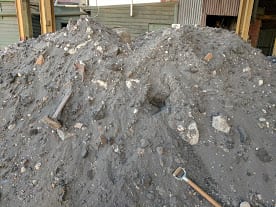
BEWARE: Sometimes excavated natural material (ENM) or virgin excavated natural material (VENM) classification and reporting isn’t done right, or it is done correctly but other soil is picked up by contractors. This can result in potentially contaminated soil being used as clean fill on development sites.
iEnvi staff were engaged as part of a team working on an upgrade to a sporting field and discovered that the clean fill arriving on the site wasn’t actually clean fill. Even though ENM and VENM reports came with the soil, industrial waste and asbestos were also actually present. Why is this a risk? We see it all the time – people receiving contaminated soil (even with reports or certificates showing it is ‘clean’, and then stuck with a legal and environmental liability that can be very costly, put projects on hold and cause businesses and individuals to become bankrupt!
The cost of contaminated soil disposal is very significant, even crippling for projects and businesses.
The volume of contaminated soil delivered was significant, and this kind of error is a common problem with soil recycling and waste management industries. To avoid this problem (where approximately 30% of ‘clean soil’ sources were found to contain incorrect or contaminated material), a 3 step process was implemented:
- The first step in avoiding contaminating the sports field was for a consultant to review the ENM and VENM reports and check that they had been completed properly. Often we find that these kinds of reports aren’t of a high standard and sometimes they’re not fully completed.
- Next, the soil source was checked to ensure that the soil being excavated and loaded for delivery met the ENM and VENM classifications as reported.
- When the soil arrived, it was inspected by site contractors or an environmental consultant to verify that it was the same soil as mentioned in the ENM and VENM reports, and was free from contaminants and debris.
Soil should only be accepted onto a site when these three steps have been carried out successfully.
If the clean fill hadn’t been inspected at the receiving site, the sports field could have been filled with contaminated soil unbeknownst to the land owner. This could have cost the client millions of dollars in contaminated soil liability to remediate or fix. Consultants used the three steps above to stop deliveries of contaminated soil and ensure that only the correct soil was used for the project.
VENM Certificate Risk: Why “Clean Fill” Is Not Always Clean
A VENM certificate is intended to confirm that excavated soil meets the definition of Virgin Excavated Natural Material and is suitable for reuse. In practice, however, misclassification is common. ENM and VENM reports are sometimes incomplete, based on inadequate site history review, or disconnected from the actual material delivered to site. In other cases, correctly classified soil is mixed with other material during excavation or transport.
We were engaged on a sporting field upgrade where fill arrived with ENM and VENM documentation, yet industrial waste and asbestos were present in the load. Had the material been placed without verification, the landowner could have inherited significant contaminated soil liability and remediation costs. Disposal of contaminated soil is expensive and can halt projects entirely.
A VENM certificate should never be treated as a formality. Proper assessment, verification, and inspection are essential to protect development sites from regulatory, financial, and environmental risk.
Independent VENM Review and the 3 Step Verification Process
To reduce the risk of contaminated fill being accepted onto site, we implement a structured three step verification process aligned with waste classification guidelines.
First, an environmental consultant reviews the ENM or VENM certificate and supporting documentation to confirm that the reporting standard, sampling methodology, and site history assessment are adequate. Many reports fail at this stage due to incomplete assessment of contamination risk, acid sulfate soils, or potential asbestos presence.
Second, the source site is verified to ensure the material being excavated matches what was tested and classified. This step helps prevent substitution or mixing of untested soils.
Third, loads are visually inspected on arrival to confirm consistency with the approved material and to identify debris or suspect contamination.
Only when all three steps are satisfied should soil be accepted. This process protects asset value, reduces environmental liability, and supports lawful reuse of excavated natural material.
When proper classification and remediation is carried out, soil can be reused to great cost savings for development projects. The sports field upgrade saved approximately one million dollars by reusing correctly screened soil. If in doubt, have a consultant review any reports of material you wish to import. For expert advice and innovative soil solutions contact iEnvi on 13000-43684 or email us.


